Keep Dancing in Later Life
Dance has the power to do something that traditional exercise often cannot — it makes you forget you are exercising at all.
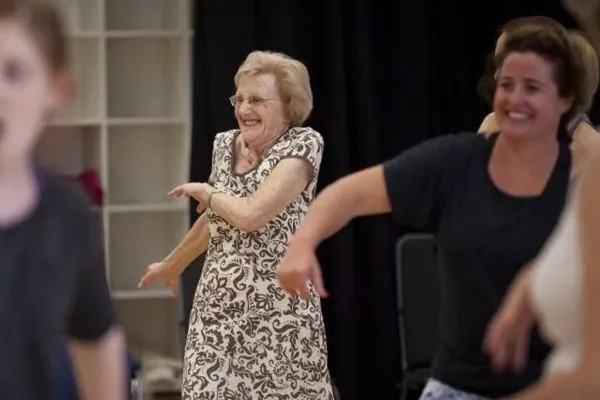
For older people, that is a genuinely significant thing. Getting moving, staying mobile, and building strength can feel like hard work when framed as a medical task. But put on some music, give people permission to move freely, and something shifts. Shoulders drop. Smiles appear. Toes start tapping.
That belief — that movement should be joyful as well as therapeutic — is at the heart of what we do at Home Links Physiotherapy, and it is what led us to develop our dance-inspired FitMove classes.
Where it all began
Our journey with dance and physiotherapy started back in 2018, when we partnered with Age UK Bexley to set up a community dance class in Bexleyheath. As a physiotherapist with a passion for dance, Joanna Ward was delighted to take on the project — and attended the People Dancing Summer School that year to deepen her practice.
One of the highlights was working with Diane Amans, an independent dance artist and community dance facilitator with decades of experience running workshops for older people. That experience shaped the class structure Joanna went on to create: a blend of physiotherapy expertise, creative choreography, and free movement that gave participants something to look forward to each week.
The feedback from those very first sessions said it all:
"I've not seen mum turn in a circle in the middle of the room like that for a very long time."
"My GP told me to do more exercise. I asked him where I could exercise that I would actually enjoy. He suggested Age UK — I was pleased to see dancing was an option."
"I didn't think my husband would join in, but it was lovely to see his toes tapping."
Why dance is so good for you
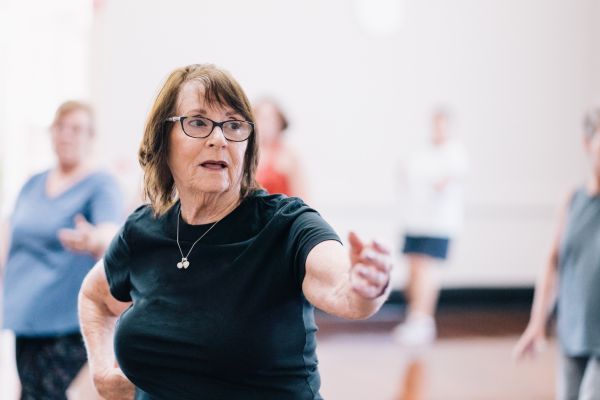
The evidence for dance as a therapeutic activity in later life is compelling. Research has shown that regular participation in dance-based classes can:
Improve balance and reduce the risk of falls
Build lower limb strength and coordination
Support cognitive function and mental sharpness
Reduce social isolation and improve mood and confidence
Increase the amount of time spent in moderate physical activity
A landmark project — Dancing in Time, commissioned by Leeds Public Health in partnership with the University of Leeds — demonstrated solid statistical improvements in mobility, balance, and confidence among older participants over just ten weeks. Crucially, the participants also spent less time sitting and more time active.
The benefits go beyond the physical. Dance gives people a sense of agency, creativity, and joy — things that are every bit as important to wellbeing as strength and balance.

FitMove: dance-inspired physiotherapy classes
Today, the spirit of those early classes lives on in FitMove — our programme of accessible group physiotherapy classes designed and delivered by Home Links.
Our Rhythm class brings together music, movement, and physiotherapy in a session that is uplifting, social, and genuinely good for you. Whether you are a lifelong dancer or someone who simply enjoys moving to music, Rhythm is designed to meet you where you are.
All FitMove classes are:
Led by qualified physiotherapists and fitness instructors
Designed to be accessible for a range of abilities
Focused on building strength, balance, and mobility
Delivered in welcoming community settings across South East London and Kent
Our other class types — including Neuroflex, PD, Pilates, PhysioPower, Physio Boost, Physio Intro, and Thrive — cater for a wide range of needs. Not sure which is right for you? We can help you find the best fit.
Could a FitMove class be right for you?
If you or someone you know is looking for a fun, social, and genuinely therapeutic way to stay active, we would love to welcome you to a class.
All new participants are encouraged to speak with our team about suitability before joining — particularly if you are managing a health condition or recovering from injury or surgery.
Get in touch with our team to find out more about FitMove classes near you, or to discuss whether a one-to-one physiotherapy assessment might be a good first step.
