
The Changing Face of Care Homes — and the Role of Physiotherapy
Choosing a care home for yourself or a family member is rarely a straightforward decision. It is often made at a time of stress, uncertainty, and change — and yet it is one of the most significant choices a family will face.
At Home Links Physiotherapy, we work regularly in care home settings across South East London and Kent, and over the years we have seen a real and meaningful shift in both who is moving into care homes, and what is possible for residents once they are settled there.
Who is moving into care homes — and why
In our experience working alongside NHS discharge teams and community health services, we have noticed a gradual change in the profile of people being offered care home placements on discharge from hospital. Increasingly, care home placement is recommended when rehabilitation at home, or in a residential setting, is not considered immediately appropriate — often because it is felt to be the safest option for the individual at that point in their recovery.
Whether this reflects a conscious strategic shift across the health and social care sector, or is simply a consequence of an ageing population and stretched community services, is not always clear. What we do know is that for many of these individuals, a care home placement does not have to mean the end of rehabilitation — far from it.
What we see when people settle in
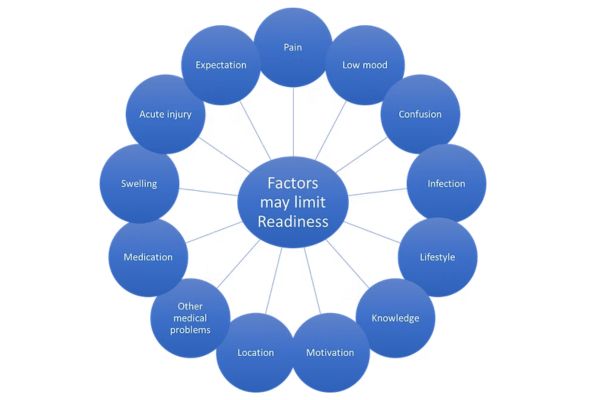
One of the most encouraging things we witness regularly is how people respond once they are settled in their new environment. Residents who had previously been unwilling or unable to engage with physiotherapy — sometimes turning the physio away entirely during a hospital stay — often become ready and willing to work on their mobility once they feel safe, comfortable, and at home.
It might be the familiarity of a consistent routine, the social environment, reduced medical stress, or simply the time and space to feel ready. Whatever the catalyst, the results can be remarkable.
Through our sessions, we regularly see care home residents:
Becoming more mobile and independent with everyday tasks and activities
Becoming brighter in mood and more confident in managing and planning their day
Developing a better awareness of their own risks and how to manage them safely
Showing measurable improvements in strength and balance, reducing their risk of falling
Reducing complex care needs over time as independence increases
How we work in care homes
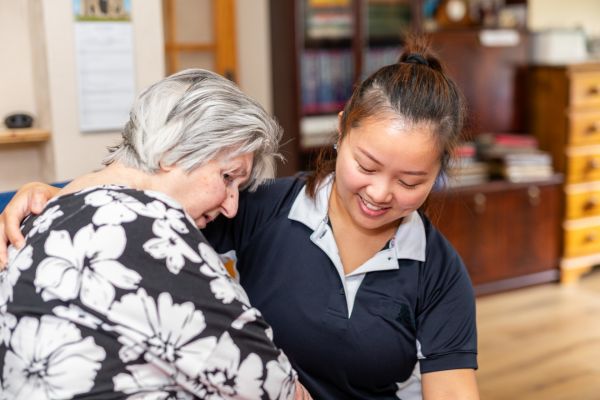
Our approach to care home physiotherapy is collaborative. We do not work in isolation — we work alongside care home staff, sharing knowledge and building the team's confidence and capability alongside our direct work with residents.
This includes:
Individual physiotherapy assessment and treatment sessions for residents
Training and supervision for care staff
Reviewing and contributing to care plans and risk assessments
Guidance on safe moving and handling for individual residents
Over time, we have seen a positive shift in care home culture too. Staff who work with us regularly begin to spot residents who are ready to take the next step — and they actively seek physiotherapy input rather than waiting to be asked. That proactive mindset makes a real difference to outcomes.
What good care home physiotherapy looks like
The best care homes are those where residents have genuine choice and control over their daily life — where they are supported to do the activities they want to do, at the times that suit them, with appropriate help to keep them safe.
Physiotherapy plays a vital role in making that possible. Maintaining mobility, managing pain, improving strength and balance, and supporting independence are not luxuries — they are fundamental to quality of life and to a person's sense of dignity and autonomy.
Care homes are required to support residents to maintain their activities and independence as their physical health or capacity changes, and to have detailed risk assessments in place for safe moving and handling. We can help care homes meet those requirements — and go beyond them.
Working with care homes across South East London and Kent
If you are a care home manager, a family member, or a healthcare professional, and you would like to find out how Home Links Physiotherapy can support residents in your setting, we would be very happy to talk things through.
We are a friendly, experienced team and are always happy to discuss a situation, offer guidance, and signpost to other services where that would be more helpful.
Get in touch with our team — we would love to hear from you.
