
5 Tips for Meaningful Visits to a Friend or Family Member in a Care Home
Visiting a loved one who lives in a care home is one of the most important things you can do for them. But it does not always feel easy. Many families tell us they worry about running out of things to say, or feel helpless when conversation is difficult — particularly if their loved one has memory problems, hearing loss, or other sensory impairments.
The good news is that a meaningful visit does not have to rely on conversation at all. At Home Links Physiotherapy, we work regularly alongside families in care home settings, and we have seen first-hand how a little creativity can transform a visit from awkward and stilted to warm, joyful, and genuinely connecting.
Here are our five tried and tested suggestions.
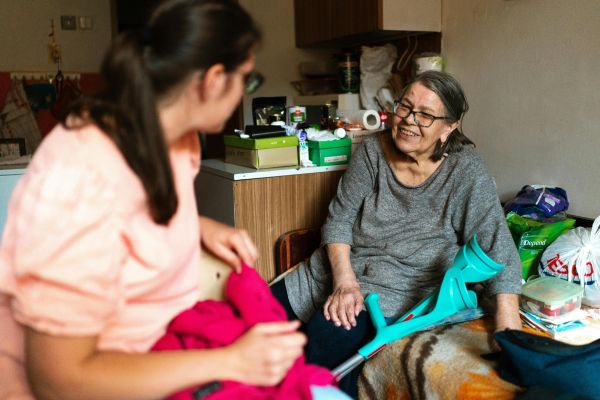
1. Make it active — a smile and a walk go a long way
Movement is good for everyone, and a short walk or a change of scenery can lift the mood considerably. If your loved one is mobile, plan a gentle walk together around the care home or garden. If they use a wheelchair, borrow one from the home and take them to a part of the building they have not visited for a while — a different lounge, a corridor with photos on the wall, or a window with a view.
The change of environment, the physical movement, and simply being side by side can feel much more natural than sitting face to face trying to fill silence.
2. Engage the senses to bring back happy feelings
The senses — particularly smell, touch, and hearing — can access memories and feelings that conversation sometimes cannot reach. Music is especially powerful. Take a phone or small speaker and play music you know your loved one will recognise — songs from their younger years, a favourite artist, or music linked to a happy time in their life.
You may be surprised by the response. Music often brings a visible brightening of mood, and may even encourage a little gentle movement — tapping a foot, nodding along, or mouthing the words. These small moments of engagement matter enormously.
3. Try a surprise bag
This is one of our favourite suggestions for families — and it works beautifully for all ages, including children visiting grandparents.
Take a drawstring bag and fill it with small, safe household objects: a wooden spoon, a clothes peg, a set of keys, a small soft toy, a coin, a piece of fabric. Take turns pulling out an item and talk about it — what it is, what it is used for, where it lives at home, or what memories it brings up.
This simple activity gives the visit a gentle structure, takes the pressure off conversation, and often sparks unexpected stories and laughter. It works particularly well for people with memory difficulties, as familiar objects can be surprisingly evocative.
4. Bring photos or books with images from the past
A small album of family photos, or a library book featuring fashions, hairstyles, cars, or events from decades past, can be a wonderful focus for a visit. Looking at images together — commenting on the hemlines, laughing at the hairstyles, or reminiscing about a place or time — is naturally engaging and does not require sustained memory or complex conversation.
For families with children, this can also be a lovely way for younger generations to learn about family history and feel more connected to older relatives.
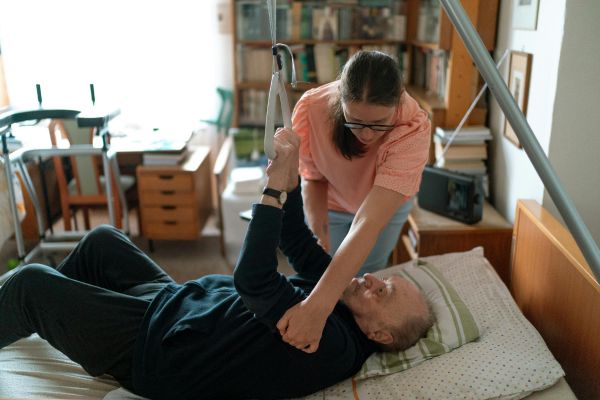
5. Do some gentle exercise together
For loved ones who enjoy physical activity, bringing a colourful balloon or a soft sensory ball can make for a surprisingly fun and therapeutic visit. Sensory balls — the brightly coloured, textured kind found in the baby or sensory sections of toy shops — are easy to handle and come in various sizes and textures.
Sitting together and gently passing, bouncing, or rolling the ball encourages movement, coordination, and laughter. Even seated movement releases feel-good hormones that benefit both mood and physical wellbeing. Children visiting are often natural enthusiasts for this kind of activity, which makes it a great option for family group visits.
If you would like a physiotherapist to suggest specific exercises tailored to your loved one's needs and abilities that you can do together regularly during visits, we would be very happy to help set this up.
The most important thing
All of these suggestions are simply tools to help you both feel more comfortable. What matters most is not the activity — it is that the person you are visiting feels safe, happy, and loved.
You do not have to get it perfectly right. Showing up is what counts.
How Home Links can help
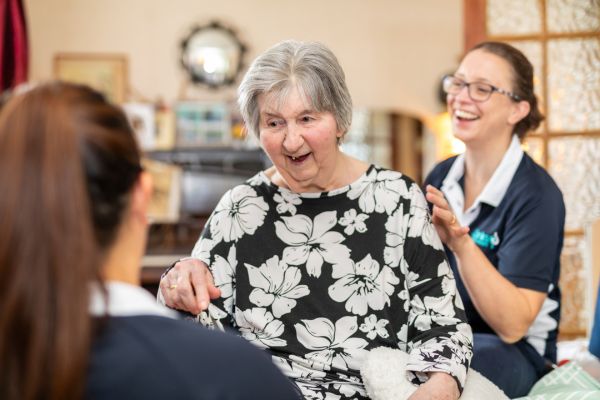
If you are concerned about a loved one's mobility, strength, or wellbeing in a care home setting, our physiotherapy team is here to help. We work in care homes across South East London and Kent, carrying out individual assessments and developing personalised rehabilitation programmes — and we are always happy to involve families in the process.
We can also work with you directly to suggest exercises and activities that support your loved one's physical health between our visits.
Get in touch with our team to speak with a physiotherapist about your loved one's movement and mobility.
