
Vestibular Rehabilitation: Physiotherapy for Dizziness, Balance, and Falls
Do you ever feel dizzy when you turn your head? Does the room seem to spin when you lie down or get up? Do you feel unsteady on your feet, or like the world is tilting or jumping around you?
These symptoms can be unsettling, exhausting, and sometimes frightening — but for many people, physiotherapy can make a significant difference.
What is the vestibular system?
The vestibular system is the sensory system in your inner ear responsible for telling your brain where your head is in relation to gravity, and how fast it is moving. It works alongside your visual system and your body's sense of position to help you maintain balance, coordinate movement, and keep a steady visual focus.
When the vestibular system is disrupted — whether through illness, injury, age-related changes, or neurological events — the signals your brain receives become confused or inconsistent. The result can be dizziness, vertigo, nausea, unsteadiness, or a sensation that things are spinning or moving when they are not.
For many people, these symptoms also lead to anxiety, a fear of falling, and a gradual withdrawal from everyday activities — which in turn weakens the body and increases the risk of falls further.
Could you benefit from vestibular rehabilitation?
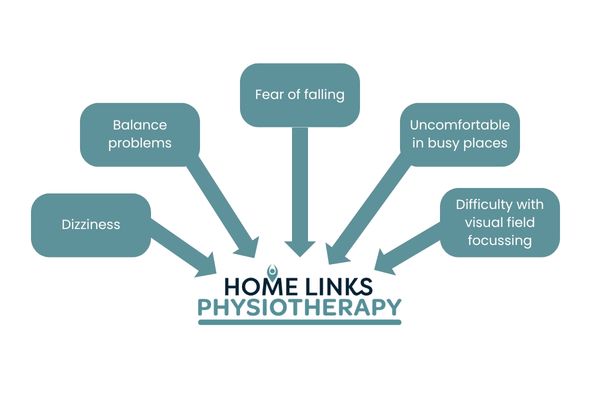
You may benefit from a vestibular physiotherapy assessment if you experience any of the following:
Dizziness or vertigo
A feeling that the room is spinning
Unsteadiness or loss of balance
Nausea linked to movement or head position changes
A sense of feeling "spaced out" or disconnected
Difficulty focusing your vision when moving
Anxiety around movement or falling
Vestibular rehabilitation is an evidence-based physiotherapy approach that can help with a range of conditions, including:
Benign Paroxysmal Positional Vertigo (BPPV) — treated with the Epley manoeuvre
Vestibular neuritis
Unilateral or bilateral peripheral vestibular dysfunction
Migraine-associated vertigo
Ménière's disease
Age-related balance changes
Cerebellar stroke
Peripheral vestibular dysfunction following traumatic brain injury
The good news is that many of these conditions respond very well to physiotherapy — and for some, such as BPPV, the results can be rapid and highly effective.
What does vestibular rehabilitation involve?
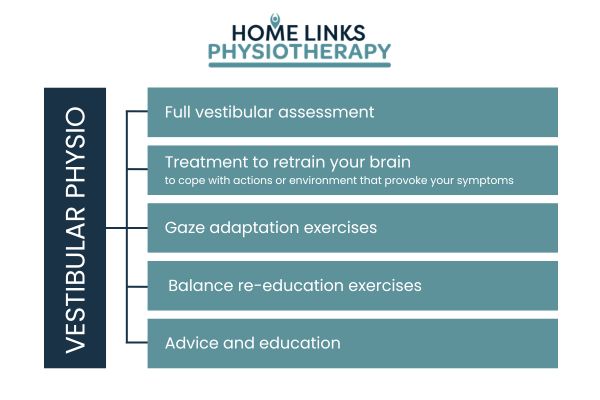
Vestibular rehabilitation is a tailored programme of exercises and techniques designed to help the brain recalibrate and compensate for changes in vestibular function. It is not a one-size-fits-all approach — your physiotherapist will carry out a thorough assessment first to understand exactly what is causing your symptoms and what approach will help most.
Your programme may include:
Gaze stabilisation exercises — to retrain the eyes and brain to work together during head movement
Habituation exercises — to gradually reduce the brain's sensitivity to movements that trigger dizziness
Balance retraining — to improve steadiness and reduce falls risk
Repositioning manoeuvres — such as the Epley manoeuvre for BPPV, which can resolve symptoms very quickly
Strength and mobility work — to support overall balance and confidence
All sessions with Home Links are delivered at home, so there is no need to travel when you are feeling unsteady or unwell.
Why treat vestibular symptoms promptly?
Left unaddressed, vestibular symptoms tend to lead to a cycle of avoidance — people move less, do less, and become less confident — which further weakens balance and increases vulnerability to falls. Falls in older adults are one of the leading causes of serious injury and loss of independence.
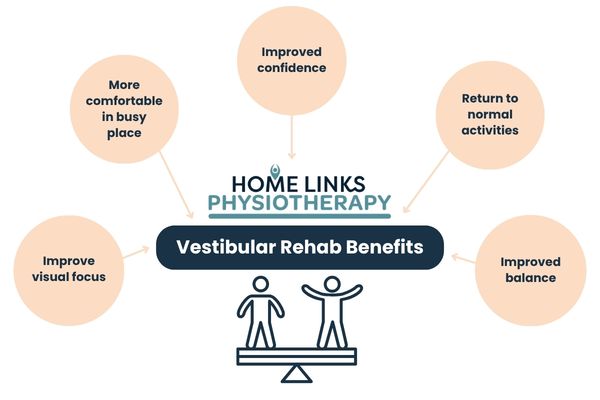
Early physiotherapy assessment and treatment can break that cycle, restoring confidence and function before the impact on daily life becomes significant.
How Home Links can help
At Home Links Physiotherapy, our team includes physiotherapists experienced in assessing and treating vestibular and balance conditions. We visit you at home across South East London and Kent, carrying out a thorough assessment and developing a personalised treatment plan.
We also work alongside GPs, consultants, and other healthcare professionals where appropriate, so your care is fully joined up.
If you are unsure whether vestibular rehabilitation is right for you, please do get in touch — we are happy to talk things through and point you in the right direction.
Get in touch with our team to arrange an assessment or find out more.
